

• info@jaybrahmaniengineering.in
  • No. 68, Karnavati Estate, Behind Royal Hotel, Opposite Odhav Circle, S. P. Ring Road, Odhav, Ahmedabad-382415, Gujarat, India

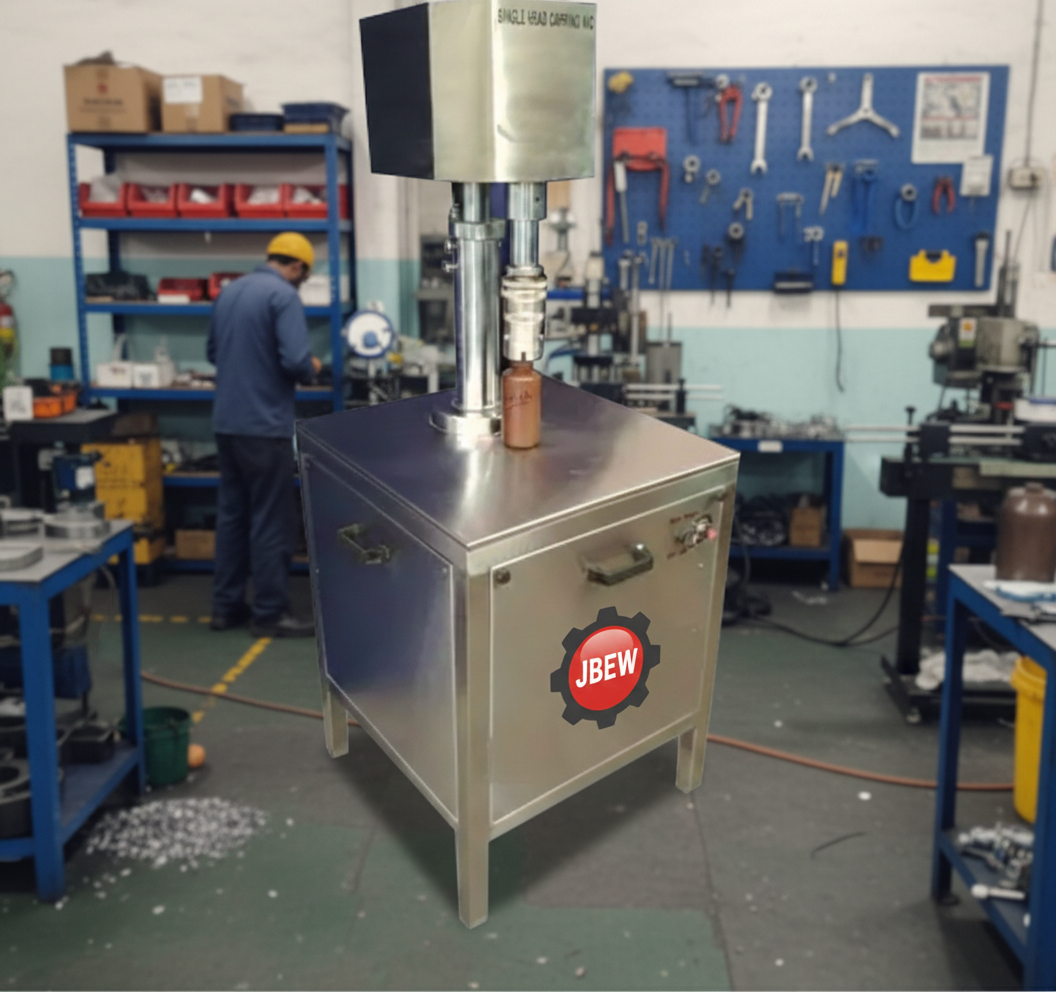
Single Head Capping Machine assembly in Wanaparthy

Service Overview

Single Head Capping Machine assembly is a standalone single-head capping module comprising a capping head, drive mechanism, and height-adjustable structure that allows precise tightening of caps on PET, HDPE, or glass bottles. The assembly is part of Jay Brahmani Engineering Works’ capping machine range, which includes single-head and multi-head ROPP and screw capping solutions for pharmaceutical, food, cosmetic, and chemical applications.

The unit is typically electrically driven and designed for outputs in the range of a few dozen bottles per minute, depending on bottle size and cap type, providing a cost‑effective option for small to medium production runs. It can be integrated with existing conveyors and bottle handling parts, and can be customized with different chucks or heads to handle various cap diameters and styles while maintaining consistent, leak‑proof sealing.
 

Single Head Capping Machine assembly from Jay Brahmani Engineering Works, Odhav can be described as a compact, automatic head-and-drive unit designed to tighten and seal caps on bottles at moderate line speeds, ideal for small to medium‑scale packaging lines. It is supplied as a complete single-head capping assembly for integration with conveyors, star wheels, and guides in bottle filling and capping systems.
 

Frequently Asked Questions

  • What is a Single Head Capping Machine assembly?

    It is a compact capping unit with one capping head, drive, and support structure used to tighten and seal caps on bottles in automatic or semi‑automatic packaging lines.

  • Which industries use this machine?

    Pharmaceutical, food and beverage, cosmetic, agrochemical, and chemical plants commonly use single head capping assemblies for small to medium production capacities.

  • What is the typical output?

    Single-head capping machines generally handle a few hundred to a couple of thousand bottles per hour, depending on bottle size, cap type, and conveyor speed.

  • What types of caps can the assembly handle?

    It can be configured for screw caps, ROPP caps, or special caps by using appropriate capping heads, chucks, and change parts.

  • Which bottles are compatible with the single head capping assembly?

    The assembly can work with PET, HDPE, and glass bottles as long as neck finish, diameter, and height are within the machine’s adjustment range.

  • Can this assembly be integrated into existing lines?

    Yes, it is designed to be mounted over existing conveyors and combined with star wheels and guides, making it suitable as an upgrade or replacement on current lines.

  • How does the Single Head Capping Machine assembly work?

    Bottles move below the head on a conveyor, the head descends, grips the cap, applies preset torque to tighten it, and then returns while the next bottle comes into position.

  • How is torque and height adjusted?

    Torque is usually adjusted via clutch or spring mechanisms on the capping head, and a height-adjustable column allows the head to match different bottle heights.

  • Can one assembly handle different bottle and cap sizes?

    Yes, by changing chucks, guides, and star wheels, and by adjusting height, the same assembly can run multiple bottle and cap formats.

  • How can loose or over‑tight caps be avoided?

    Proper torque setting, correct bottle height adjustment, stable conveyor speed, and using the right chuck/liner for each cap help prevent loose or over‑tight caps.

  • What routine maintenance is required?

    Regular cleaning, lubrication of moving parts, inspection of chucks, springs, and bearings, and periodic verification of torque settings are recommended.

  • What safety features are generally provided?

    Typical safety features include mechanical guards around moving parts, an emergency stop switch, and electrical interlocks as per standard machine safety practices.